By Ralph Kennedy Pope, Del Mar, Calif.
When my mother first met my father’s family, his stepmother took her aside. Dad was one of 10 children, the seventh son. “You’re getting the best one,” she told my mother. Years later, at our dining room table, I heard a story that makes me think she had him figured just right.
My father was an Army artillery officer. After the fighting ended in Europe in 1945, he stayed in Germany with the occupation forces. One day a German doctor came looking for him. A boy in town had an infection, and the doctor was afraid he would lose him. The Americans had penicillin. Could my father spare some?
As Dad told it, the Army had reserved the medicine for military personnel. He knew the orders. He also knew the doctor had come as far as the American camp because he had run out of ways to help his patient.
My father got a vial of penicillin and handed it to him. The doctor took it back to the boy. The boy lived.
When the Army asked what had happened to the medicine, Dad told them where it had gone. For a time, he faced the possibility of a court-martial. He went on to serve in Korea and Vietnam and eventually became a brigadier general.
My mother was an Army nurse. She helped bring wounded soldiers home from Europe. I grew up hearing pieces of the war from both of them, and now I find myself wishing I had asked one more question. Did that boy ever come looking for Dad when he was grown? I would dearly love to know what became of him.
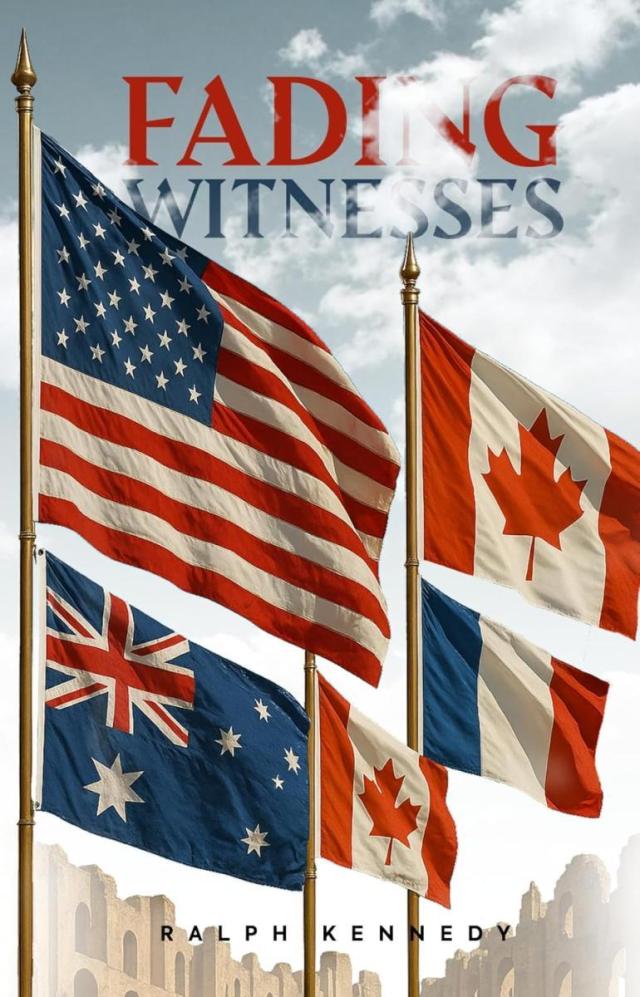
That wish is part of why I wrote "Fading Witnesses." So many of us grew up at tables like ours. If there’s a veteran in your family whose stories you’ve heard a dozen times, ask to hear one again. This time, write down the name of the town. Ask what happened to the boy.
"Fading Witnesses" by Ralph Kennedy Pope