By Ashley Nicole Gandy
The veteran community recently said goodbye to a towering force of grace, resilience and historic justice: Capt. Diane Carlson Evans. A nurse in the U.S. Army Nurse Corps during the Vietnam War, Diane passed away on May 20, leaving behind a legacy that permanently reshaped how America remembers its wartime heroes. For those of us raised in military families, and for anyone dedicated to advocating for responders, volunteers and veterans, her life stands as a masterclass in what it means to turn profound grief into an unyielding mission.
In 1968, at just 21, Diane was deployed to Vietnam. Stationed in the combat zones of Vung Tau and Pleiku, she lived at the crossroads of trauma and survival. She lived through the Tet Offensive, treating thousands of wounded soldiers, holding the hands of dying young men and enduring the relentless, invisible weight of battlefield medicine.
Yet, when Diane and thousands of her sister nurses returned home, they met a country that didn't just reject the war - it invisible-ized the women who served in it. History books and public monuments overlooked the nearly 10,000 military women and countless civilian volunteers who held the frontlines together.
Diane refused to let that silence stand.
When the Vietnam Veterans Memorial was dedicated in Washington, D.C. in 1982, featuring a statue of male soldiers, Diane looked at it and knew the story was incomplete. She founded the Vietnam Women’s Memorial Project in 1984, beginning a grueling 10-year battle against bureaucratic red tape, federal commissions and deep-seated skepticism. She fought because she knew that monuments are not just bronze and stone - they are public declarations of a nation’s gratitude and historical truth.
On Nov. 11, 1993, that fight culminated in the dedication of the Vietnam Women’s Memorial on the National Mall. The statue, depicting three nurses tending to a wounded soldier, became a sacred space for healing. It was a visual confession that women, too, bled, suffered and saved lives in the jungle. Her book "Healing Wounds" beautifully captured this decade-long crusade, showing that the battle didn't end when she took off the uniform.
As a professional writer and the proud daughter of a veteran, I look to Diane Carlson Evans as a North Star. Ensuring that those who step up in times of national crisis are never forgotten is a deeply personal mission. Whether it is the nurses of Vietnam, the volunteers of the American Red Cross or the responders who face long-term health crises after a disaster, the women who run toward tragedy have always faced an uphill battle for recognition and care. Diane broke the ground so the rest of us could stand firm.
Capt. Evans proved that an individual voice, backed by a righteous cause, can alter the landscape of American history. She healed a nation's blind spot and corrected a fractured historical narrative in the halls of Washington.
Her shift is over, but the torch she lit burns brighter than ever in the hearts of every advocate fighting to keep the legacy of our heroes alive.
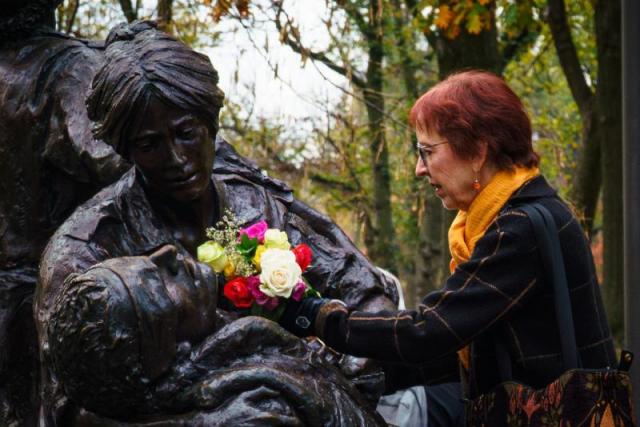
Diane Carlson Evans at the Women's Memorial.
The healing touch of a hero: remembering Capt. Diane Carlson Evans
Elizabeth City, NC
May 24, 2026
Submitted by:
Ashley Gandy